

Anzac Cemetery, Sailly-Sur-La-Lys
- Country France
- Total identified casualties 263 Find these casualties
- Region Pas de Calais
- Identified casualties from First & Second World War
- GPS Coordinates Latitude: 50.65271, Longitude: 2.76311
Location information
The Cemetery is on the north-west side of the road between Armentieres and Bethune, the D945, just north of the village Sailly-sur-la-Lys.
Visiting information
ARRIVAL
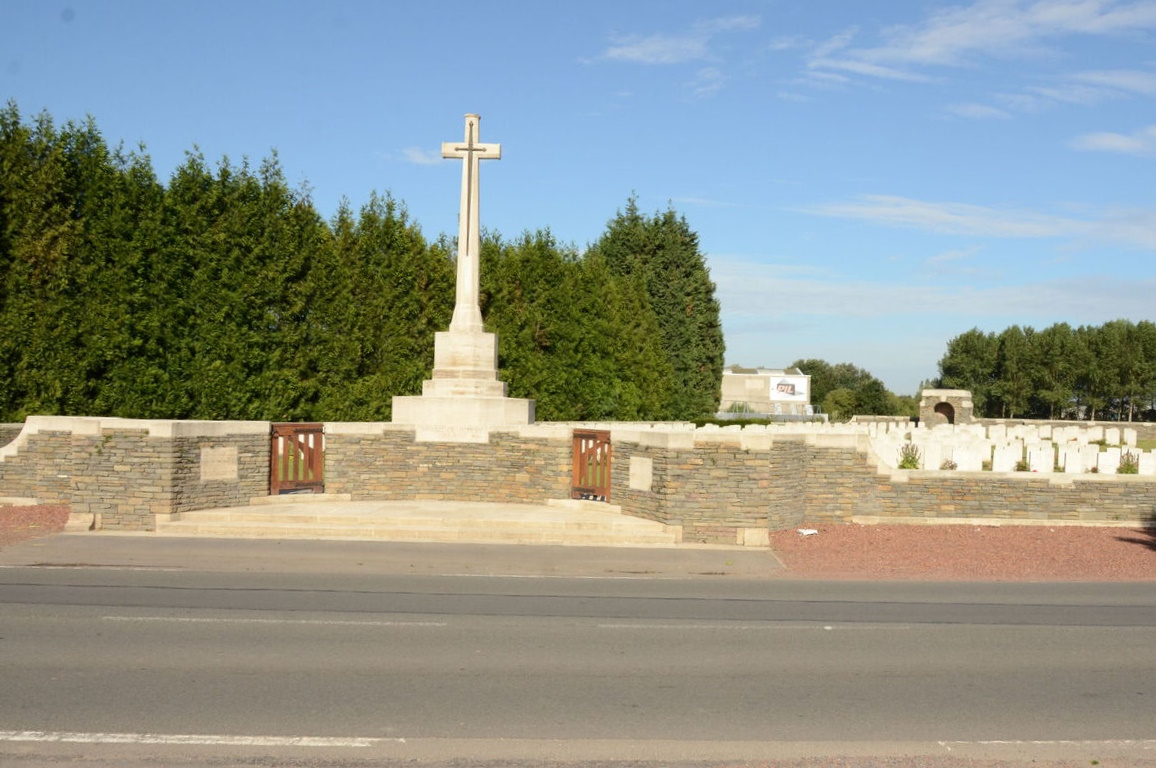
The Cemetery is at the south-western edge of the Sailly-sur-la-Lys commune in the Pas-de-Calais department. It is on the west side of Rue de la Lys (D945) leading south out of the commune, and directly opposite the Canadian Cemetery, Sailly-sur-la-Lys.
There is no signage for the Cemetery.
PARKING
There are small, compacted gravel lay-bys on either side of the entrance feature that can fit up to four cars. There are similar lay-bys across the street in front of Sailly-sur-Lys Canadian Cemetery.
There is a marked pedestrian crossing between the two cemeteries across the D945.
ACCESS LAYOUT AND MAIN ENTRANCE
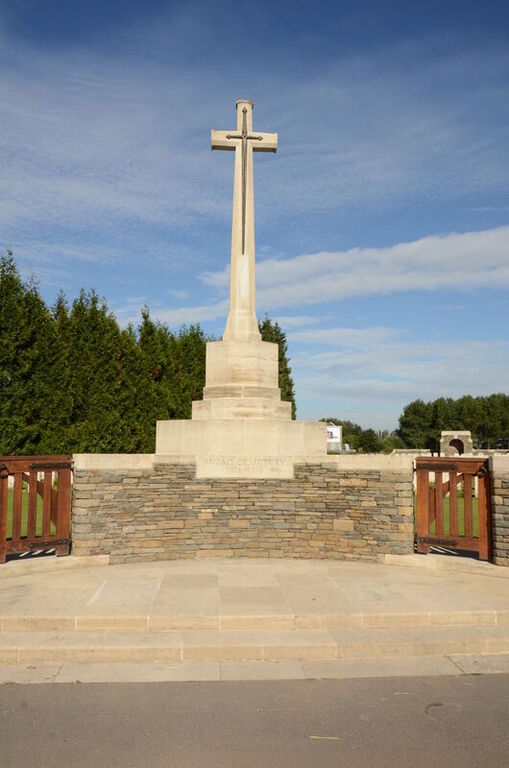
The main entrance to the cemetery is via two stone steps up to a semi-circular stone threshold. The area between the road and paving is level tarmac. There are two wooden gates, approximately 1 metre wide, that open inwards into the cemetery. Each gate has a ring-shaped handle that turn to lift a latch. Both gates have a single step up from the stone threshold. There is paving, approximately 400 mm wide inside both gates that extends round the Cross of Sacrifice, and in front of stone benches built into the walls.
The Cross of Sacrifice is immediately inside the entrance feature, built on a raised platform, The Register Boxi is built into the rear of the platform above a stone seating feature that surrounds the Cross.
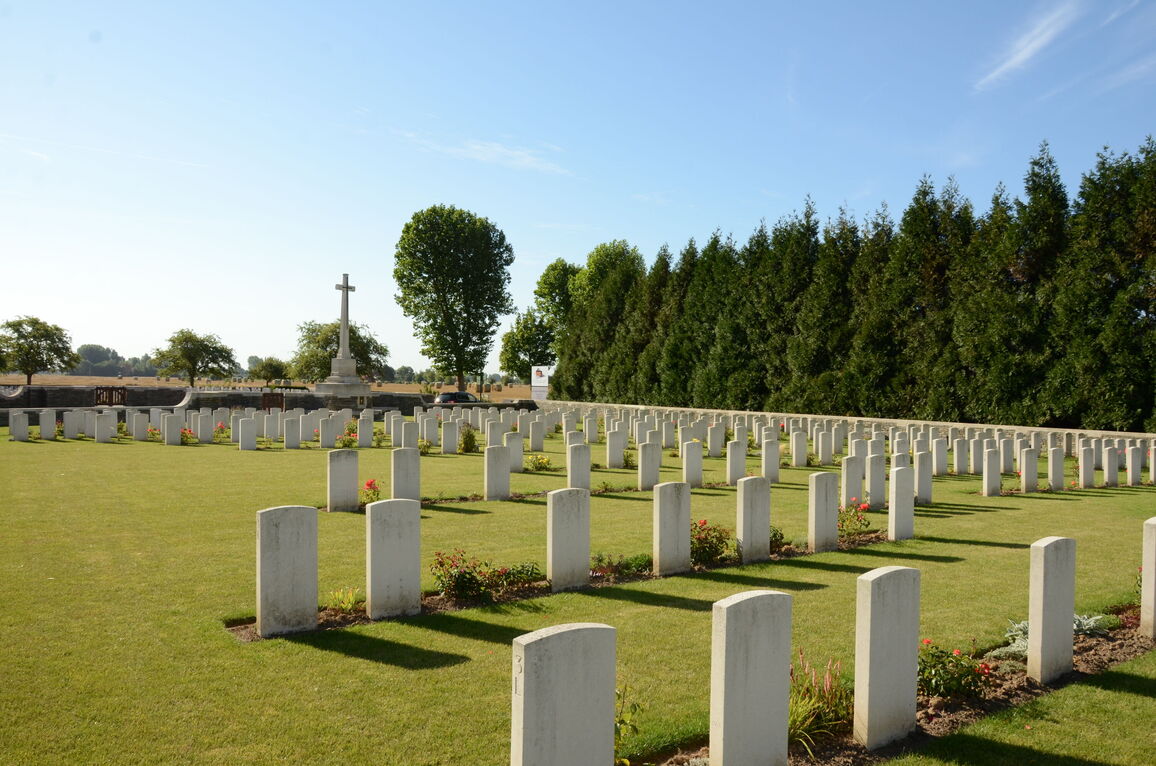
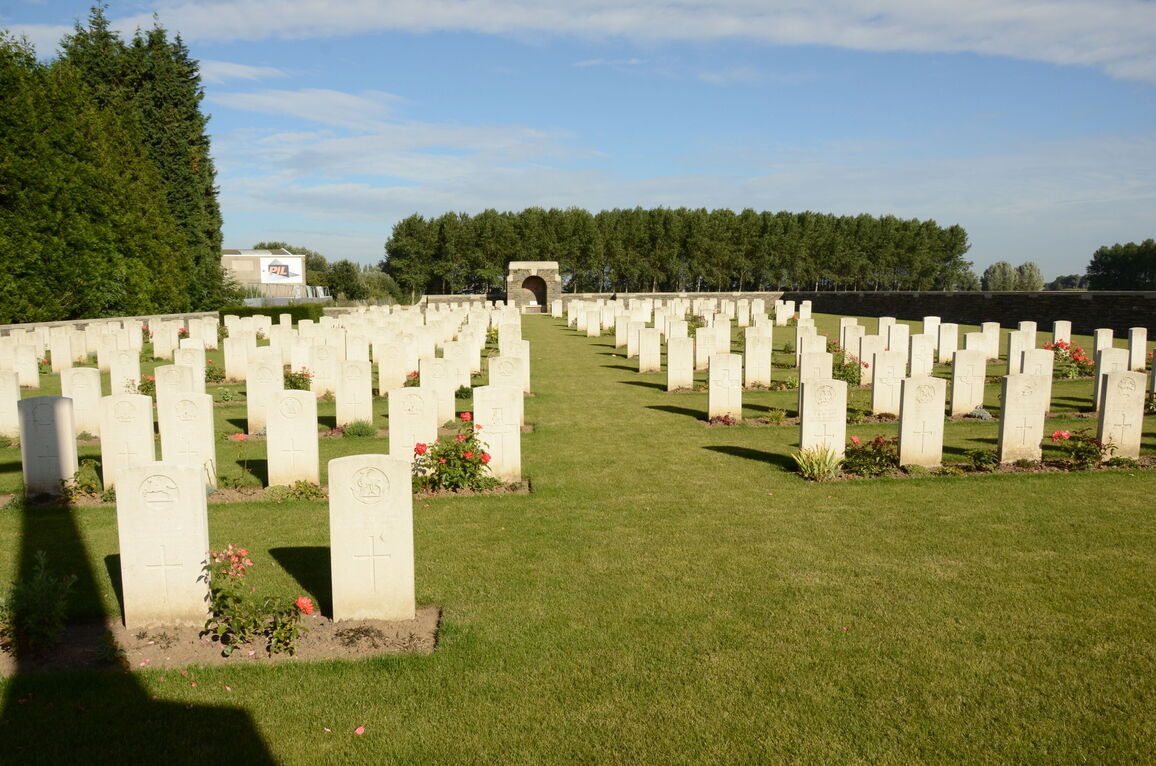
The paths inside the Cemetery are grass, firm, and smooth throughout.
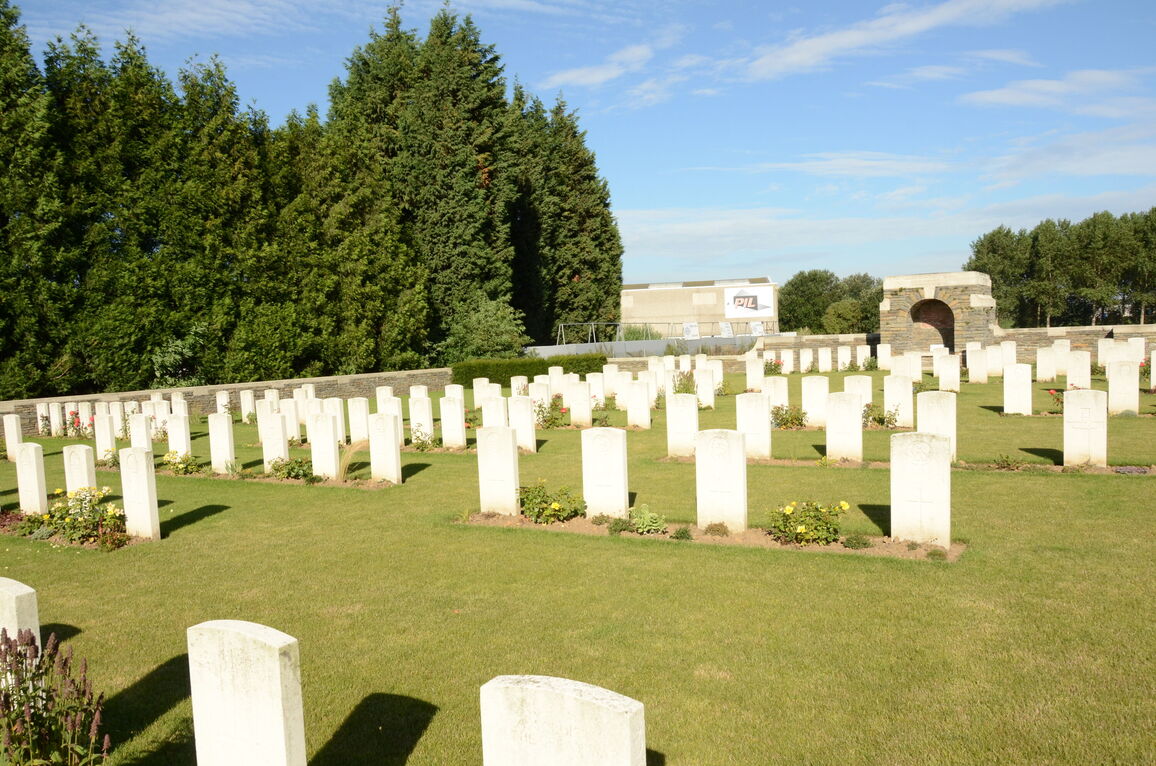
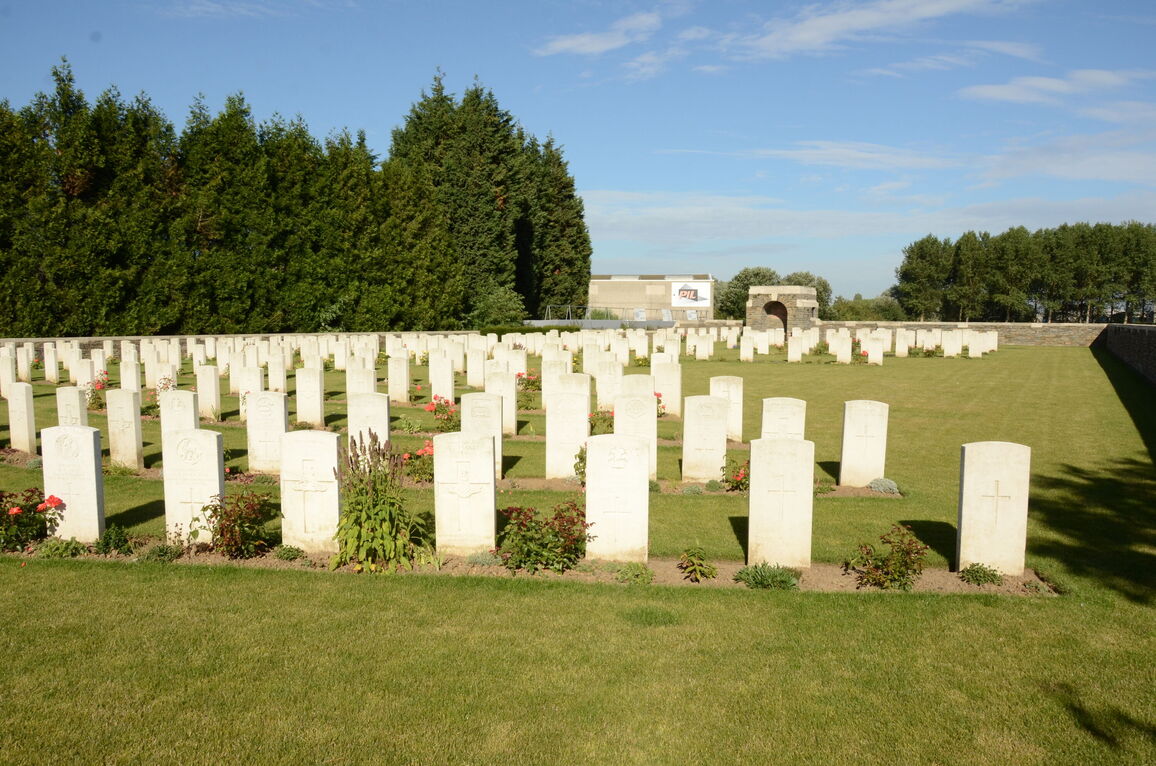
There is a stone and brick shelter building built into the rear wall of the cemetery, in line with the Cross of Sacrifice. There is stone paving in front of the shelter, approximately 100 mm higher than the grass.
Ther is a stone bench built into the inside wall of the shelter
ALTERNATIVE ACCESS
There is no alternative entrance into the cemetery.
ADDITIONAL INFORMATION
The Cemetery is permanently open.
History information
Sailly Church was burnt during the open fighting of October 1914, when French cavalry and British and German infantry fought on the Lys, but from the winter of 1914-1915 to the spring of 1918 the village was comparatively untouched. It was captured by the Germans on 9 April 1918, and it remained in their hands until the beginning of September.
Anzac Cemetery was begun by Australian units in July 1916, immediately before the Attack at Fromelles, and it contains the graves of many Australian soldiers who died in that engagement. It continued in use as a front-line cemetery until April 1918 and was used by German troops for the burial of Commonwealth soldiers during the following summer.
Anzac Cemetery contains 320 Commonwealth burials of the First World War. 62 of the burials are unidentified but there are special memorials to seven casualtes known or believed to be buried among them, and to three soldiers buried by the Germans in Sailly Churchyard whose graves could not be located. It also contains five Second World War burials and six German graves.
The cemetery was designed by Sir Herbert Baker.